
Access Control and IoT Devices
Small loads, awkward places, and devices that were never designed for PoE
Door controllers, intercoms, digital signage, sensors, gateways and single-board computers are individually undemanding — a few watts each. What makes them a design problem is where they live and what connectors they expect. Many have no PoE support at all and arrive expecting 5 V over USB-C or 12 V on a barrel jack, in a location with structured cabling and no power outlet.
What makes this deployment hard
- Most IoT and access devices are not PoE-capable and expect 5 V, 9 V, 12 V or 24 V DC
- Connector and polarity vary by device, and the wrong one damages hardware
- Devices that fail to classify are assigned class 0 and reserve the full 15.4 W each
- Door-side equipment sits in enclosures with no mains and limited space
- Long DC tails from a splitter add resistance and drop voltage under load
Quick reference
| Door controller | 5-12 W typical |
| IP intercom | Class 2-3 |
| Single-board computer | 5 V, up to 15 W |
| Sensor or gateway node | Class 1-2, 2-7 W |
| Unclassified device | Reserves 15.4 W as class 0 |
Design guidance
The splitter is the bridge
A PoE splitter takes the single cable carrying data and power, separates the two, and presents an ordinary data connection plus a DC output at the voltage the device expects. That is what lets a non-PoE camera, a Raspberry Pi, a router or an IoT gateway run from a PoE port elsewhere in the building. Match three things: the output voltage, the connector and polarity, and the current the device draws at peak rather than at idle.
Do not pair active devices with passive supplies
A passive adapter applies a fixed voltage to the cable with no detection or classification. It works only in a closed system where both ends are known and matched. A standards-compliant switch will not power a passive adapter that presents no detection signature, and a passive supply can destroy a device expecting negotiated power. If a datasheet does not name an IEEE standard, assume it is passive and treat it accordingly.
Watch what unclassified devices do to the budget
A device that presents a valid detection signature but no meaningful classification current is assigned class 0, and the switch reserves the full 15.4 W with no information to do better. A rack of class 0 devices each drawing 4 W will exhaust a switch budget at roughly a quarter of its real capacity. Where you control the device selection, prefer properly classifying hardware; where you do not, budget on the reservation rather than the measurement.
Keep the DC tail short
Resistance in the DC output cable drops voltage under load, and a device with a narrow input window will reset intermittently rather than fail cleanly — the hardest kind of fault to diagnose. Keep splitter tails as short as the installation allows, and where a longer tail is unavoidable, specify a heavier gauge. Cable length, connector type and polarity are all standard customisation options on volume orders.
Equipment for this application
All products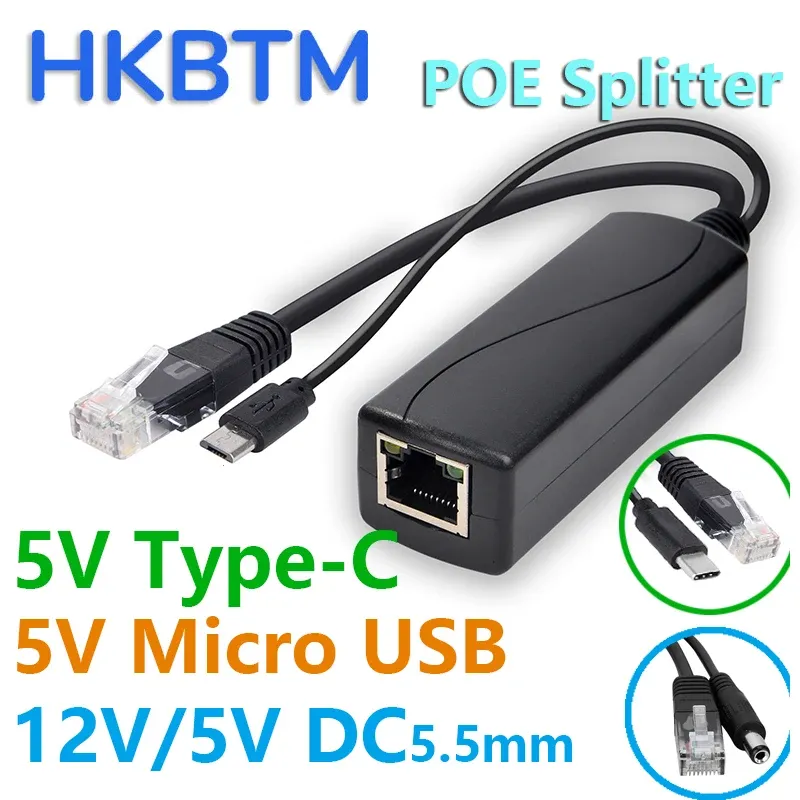
POE Splitter 48V To 5V 12V Micro USB tpye-C BarrelJack Power Supply for Huawei for Hikvision for Bobcat for Raspberry Pi
POE Splitter 48V To 5V 12V Micro USB tpye-C BarrelJack Power Supply for Huawei for Hikvision for Bobcat for Raspberry Pi
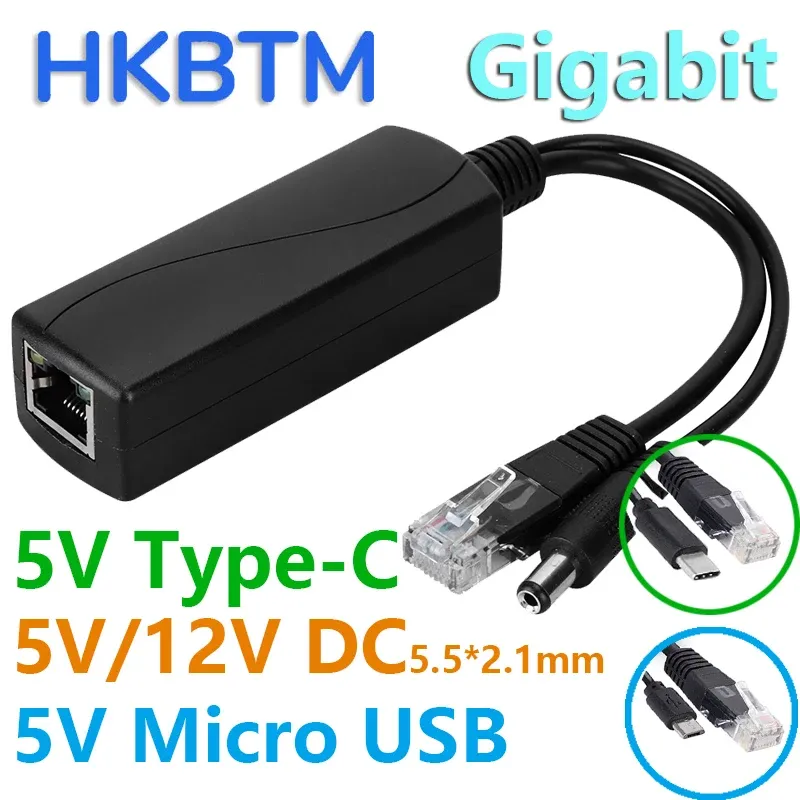
Gigabit PoE Splitter Micro USB/Type-C/DC Power over Ethernet for IP Camera/Raspberry PI/sensecap/Bobcat
Gigabit PoE Splitter Micro USB/Type-C/DC Power over Ethernet for IP Camera/Raspberry PI/sensecap/Bobcat
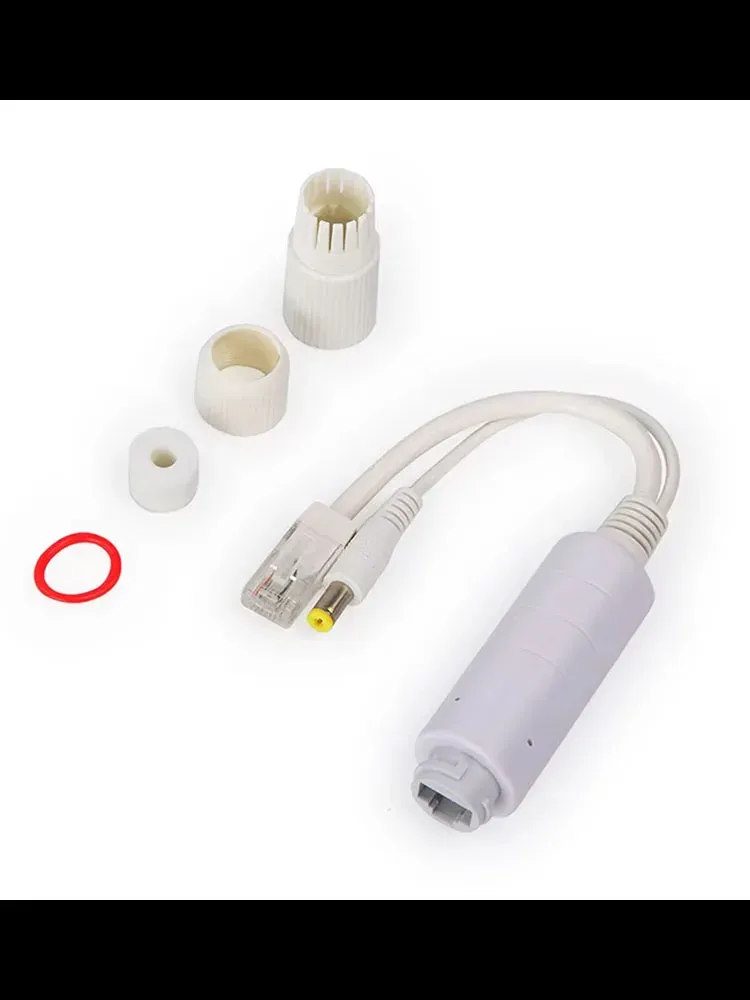
Waterproof POE Splitter DC 12V IEEE 802.3af 100Mbps Power over Ethernet for IP Cameras NVR System Wifi Connection AP
Waterproof POE Splitter DC 12V IEEE 802.3af 100Mbps Power over Ethernet for IP Cameras NVR System Wifi Connection AP

28cm USB Cable with Switch ON/OFF Cable Extension Toggle for USB Lamp USB Fan Power Supply Line Durable HOT SALE Adapter
28cm USB Cable with Switch ON/OFF Cable Extension Toggle for USB Lamp USB Fan Power Supply Line Durable HOT SALE Adapter
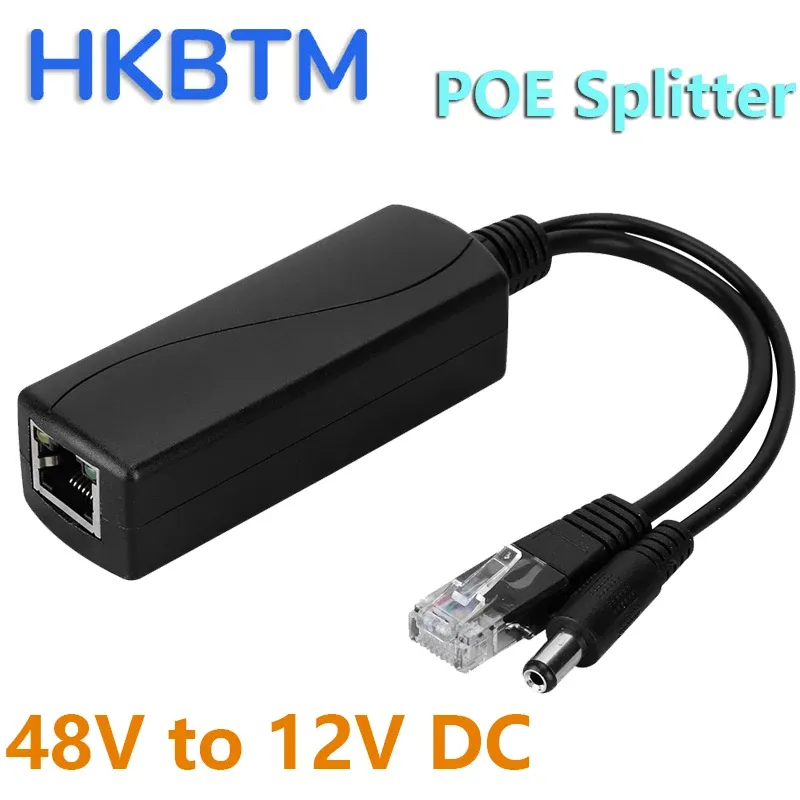
48V To 12V POE Connectors Adapter Cable Splitter Injector Power Supply for Huawei for Hikvision 2022 New
48V To 12V POE Connectors Adapter Cable Splitter Injector Power Supply for Huawei for Hikvision 2022 New
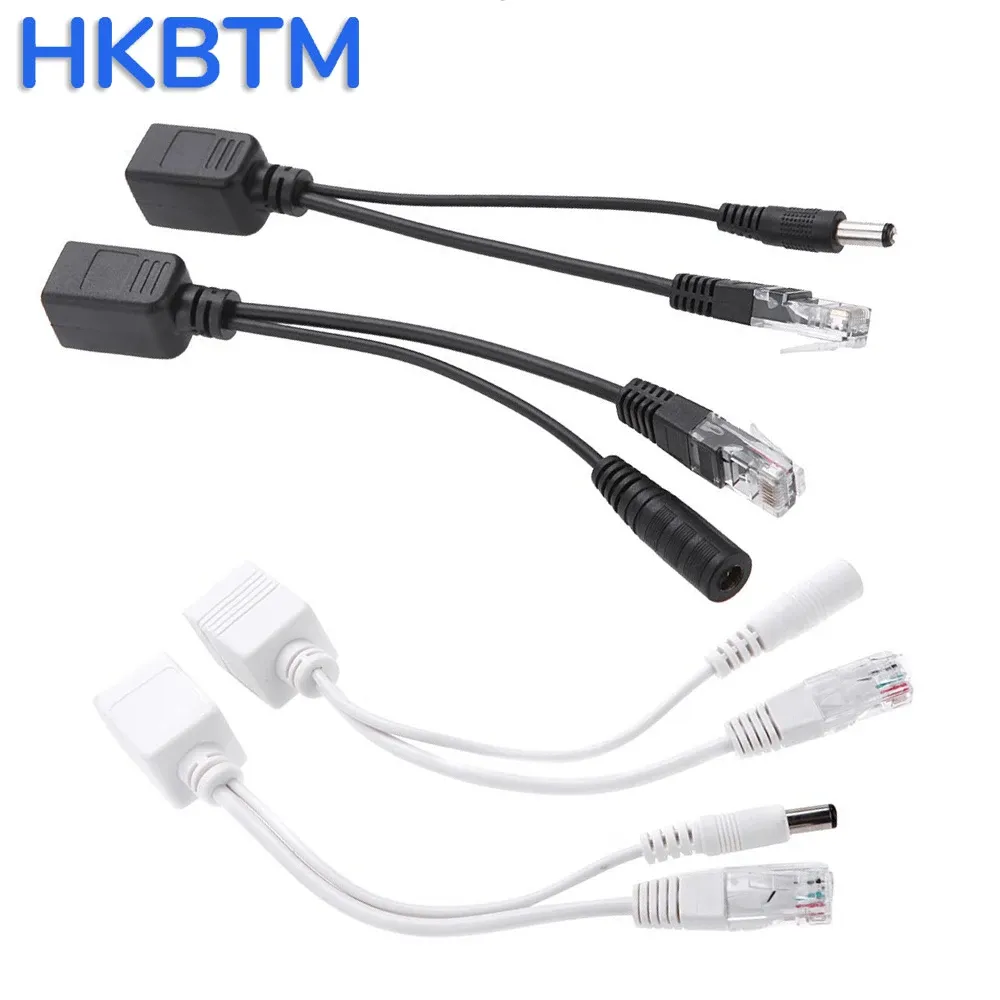
POE Cable Passive Power Over Ethernet Adapter Cable POE Splitter Injector Power Supply Module 12v For IP Camera
POE Cable Passive Power Over Ethernet Adapter Cable POE Splitter Injector Power Supply Module 12v For IP Camera
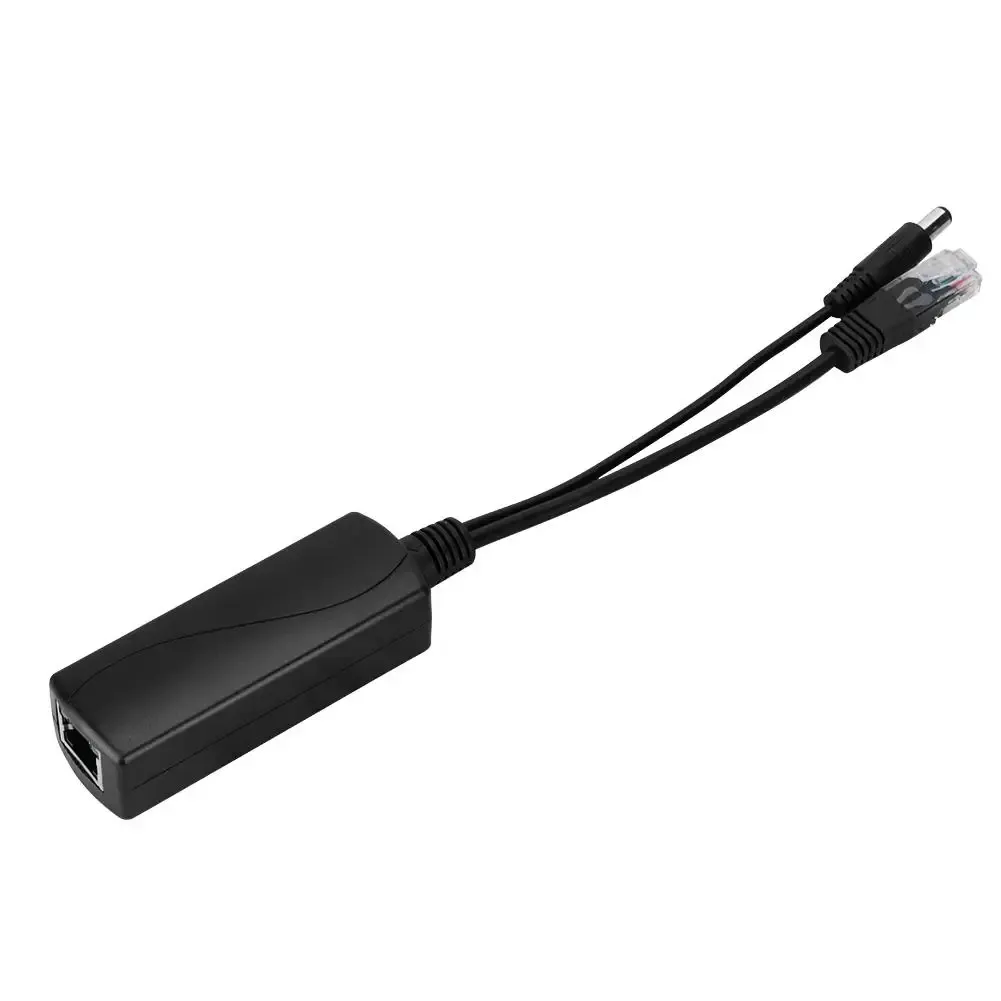
12V POE Connectors Adapter Cable Splitter Injector Power Supply for Huawei for Hikvision 2022 New
12V POE Connectors Adapter Cable Splitter Injector Power Supply for Huawei for Hikvision 2022 New
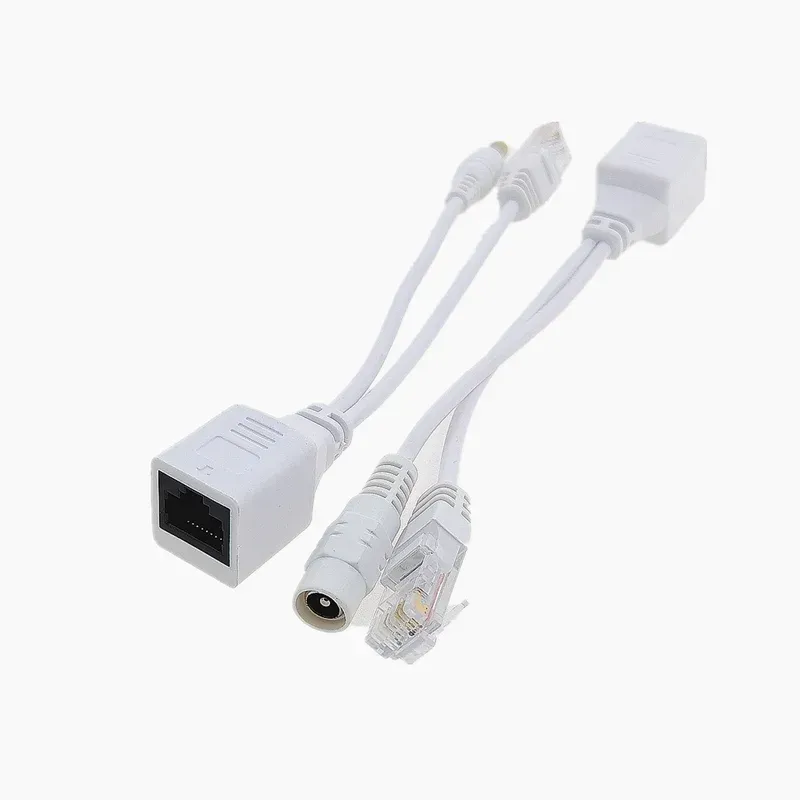
POE Cable Passive Power Over Ethernet Adapter Cable POE Splitter Injector Power Supply Module 12v For IP Camera
POE Cable Passive Power Over Ethernet Adapter Cable POE Splitter Injector Power Supply Module 12v For IP Camera
The engineering behind it
What Is a PoE Splitter and How Does It Work
Learn what a PoE splitter does, how it separates power and data, and how it steps PoE voltage down to 5V, 9V, 12V or 24V for non-PoE devices.
Read articlePoE Voltage Levels: 5V, 9V, 12V, 24V Output Explained
Which devices need 5V, 9V, 12V or 24V, how PoE splitters regulate these outputs from 48V, and how voltage choice affects efficiency.
Read articleActive vs Passive PoE: Key Differences and Risks
Active PoE negotiates power safely per IEEE; passive PoE applies fixed voltage with no handshake. Learn the differences, risks, and why compliance matters.
Read articlePoE Power Classes 0 to 8 Explained
What each PoE class means at the PSE and at the PD, how physical-layer classification works, and why LLDP negotiation and Autoclass change your power budget.
Read articleSpecify it with us
Tell us the load, the distance and the environment, and we will come back with a part list. We also build to specification where nothing off-the-shelf fits.