
PoE Voltage Levels: 5V, 9V, 12V, 24V Output Explained
Which devices need 5V, 9V, 12V or 24V, how PoE splitters regulate these outputs from 48V, and how voltage choice affects efficiency.
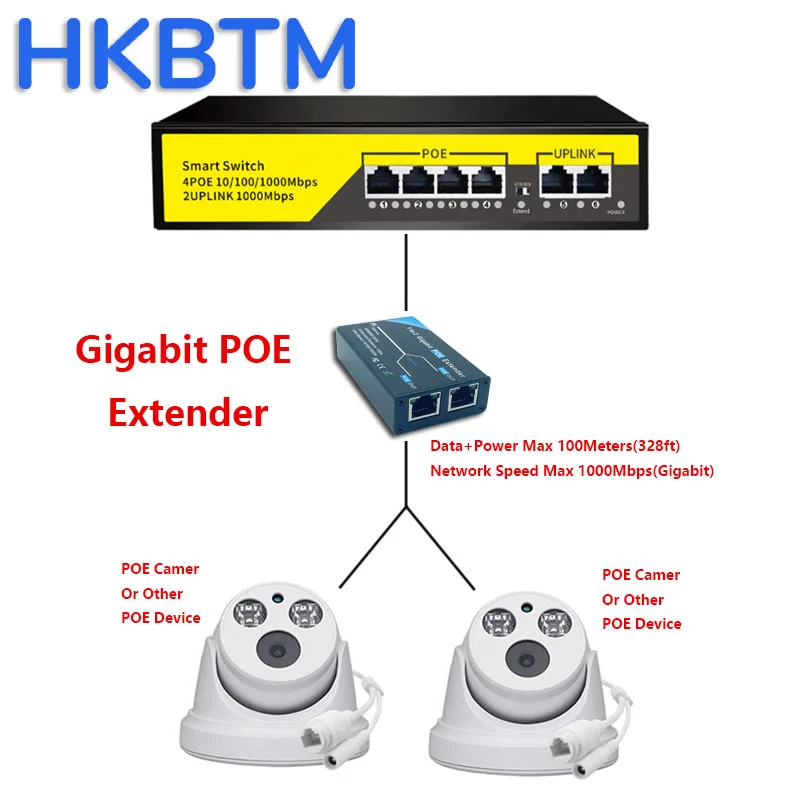
Standardized PoE delivers a high DC voltage on the cable - nominally 48-56 V - precisely because higher voltage means lower current for a given power, and lower current means less heat lost in the copper. But most endpoints do not run on 48 V. They expect a tidy 5 V, 9 V, 12 V, or 24 V rail. The job of a PoE splitter or PD power module is to convert that high line voltage down to the level the device actually needs.
Why PoE Runs at High Voltage
Carrying power as 48 V rather than 12 V over the same cable reduces current by a factor of four for equal wattage, and resistive loss (P = I²R) falls by a factor of sixteen. That is what makes 100 m runs practical. The trade-off is that the receiving device must step the voltage back down, which is exactly what the splitter's DC-DC converter does.
Which Devices Need Which Voltage
| Output | Typical devices | Notes |
|---|---|---|
| 5 V | Single-board computers, USB IoT gateways, small sensors | Low power; watch for higher current at the same wattage |
| 9 V | Certain routers, audio gear, niche modules | Less common; verify device label |
| 12 V | IP cameras, Wi-Fi routers/APs, signage players, small switches | The most widely requested splitter output |
| 24 V | Industrial controllers, some PTZ cameras, some APs | Common in industrial and AV equipment |

Voltage, Current, and Heat at the Output
For a fixed wattage, a lower output voltage means a higher output current. A 10 W load draws about 0.83 A at 12 V but about 2 A at 5 V. Higher current on the DC output side demands thicker output wiring and a converter rated for that current, and it makes the short DC tail between splitter and device more sensitive to voltage drop. This is one reason 12 V is so popular: it balances broad device compatibility against manageable current.
Regulation and Why It Matters
A quality splitter provides a regulated output - it holds the target voltage steady despite changes in load current and in the incoming line voltage (which itself can sag toward 41-44 V at the end of a long cable). Poorly regulated or unregulated outputs can drift, causing cameras to reboot, access points to drop clients, or sensors to read erratically. Regulation is delivered by a switching (buck) converter with feedback control, and good designs also include output ripple filtering so sensitive radios and image sensors see clean DC.
Efficiency Considerations
- Conversion efficiency: Modern buck converters reach roughly 85-93% efficiency; the remainder becomes heat inside the splitter. Higher step-down ratios (48 V to 5 V) are generally a little less efficient than gentler ones (48 V to 24 V).
- Thermal headroom: The lost wattage must be dissipated, so a tightly enclosed or high-current splitter needs adequate thermal design.
- End-to-end view: True system efficiency is the product of cable delivery efficiency and converter efficiency - both worth optimizing for battery-backed or large-scale installs.
Choosing the Right Output
Always take the required voltage from the device's datasheet or label, never by assumption, and confirm the current the device draws so the converter is sized with margin. Where a project standardizes on an unusual rail or needs tighter ripple, regulation, or efficiency than catalog parts provide, a purpose-built module is warranted. We design PoE power modules to specified output voltages with controlled regulation, ripple, and efficiency targets, so the device at the end of the cable always sees clean, stable power.
Need PoE hardware for your project?
Browse our PoE splitters or request a custom power module built to your spec.