

Industrial and Outdoor Networks
Wide temperature range, surge exposure and no mains where you need it
Outside the comms room the assumptions change. Equipment sits in unconditioned cabinets, on poles and in ceiling voids where summer and winter extremes both bite; the cable runs cross open ground and between structures with separate earthing systems; and there is rarely a convenient power outlet at the far end. PoE is what makes these installations practical, and the failure modes are entirely different from an office deployment.
What makes this deployment hard
- Roadside cabinets and ceiling voids routinely exceed the 0-40 °C range of commercial-grade equipment
- Runs between buildings carry ground potential difference straight through your hardware
- Repeated moderate surges degrade protectors and semiconductors cumulatively, not all at once
- Remote sites have no mains, so every device must be fed from the cable
- Site visits to a pole or a mast cost far more than the equipment on it
Quick reference
| Commercial temperature range | 0 to 40 °C |
| Industrial range to specify | -30 to 70 °C typical |
| Ethernet port isolation | 1500 Vrms typical |
| Reach per extender hop | ~100 m |
| Practical cascade limit | 3-4 hops, 400-500 m |
Design guidance
Specify the temperature range you will actually see
An extender or splitter rated 0 °C to 40 °C installed in an outdoor enclosure is a callout waiting to happen — enclosures in direct sun run well above ambient, and unheated cabinets in winter go well below freezing. Check the operating range against the real environment rather than the nominal climate, and remember that a device dissipating its own power inside a sealed box raises its own internal temperature further.
Decide the earthing strategy before the cable goes in
Shielded cable protects only if the shield is bonded to a low-impedance earth. Bonded at both ends between two buildings with independent earths, it becomes a conductor for ground potential rise and can carry substantial current through your equipment. Bond to a single common earth reference where the two ends share one, and interrupt the run with fiber where they do not. Document the arrangement in the handover pack — the next contractor cannot see bonding decisions from the outside.
Protect both ends, not just the switch
Protection at the switch alone saves the switch and nothing else. A pole-mounted device is typically the highest and most exposed point in the system and needs its own surge protector bonded to the pole earth. Where a device has both a network cable and a separate mains supply, both paths need protection — surge simply enters through whichever one you left open.
Get power to where there is none
A PoE extender draws its own power from the incoming link and re-sources it downstream, so a chain of them can reach several hundred metres with no local supply anywhere along the route. Work backwards from the load: decide what the end device needs, add roughly 6 W per hop, and choose a source port class that covers the total. Waterproof-rated extenders and splitters exist precisely for the pole-mounted and outdoor-cabinet cases.
Equipment for this application
All products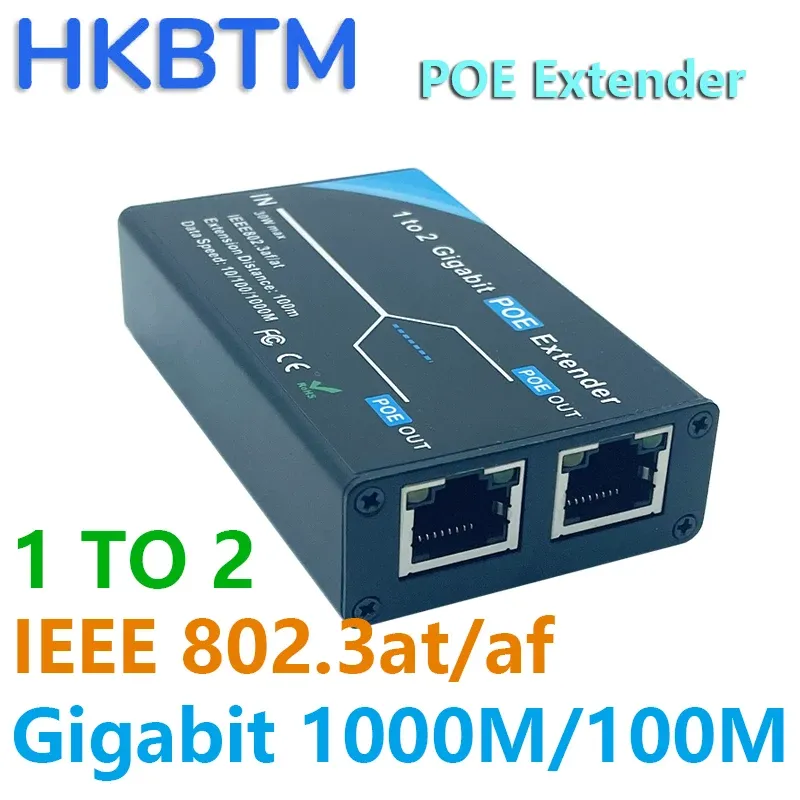
Gigabit 2 Port POE Extender, IEEE 802.3af/at PoE+ Standard, 10/100/1000Mbps, POE Repeater 100 meters(328 ft), Extender
Gigabit 2 Port POE Extender, IEEE 802.3af/at PoE+ Standard, 10/100/1000Mbps, POE Repeater 100 meters(328 ft), Extender
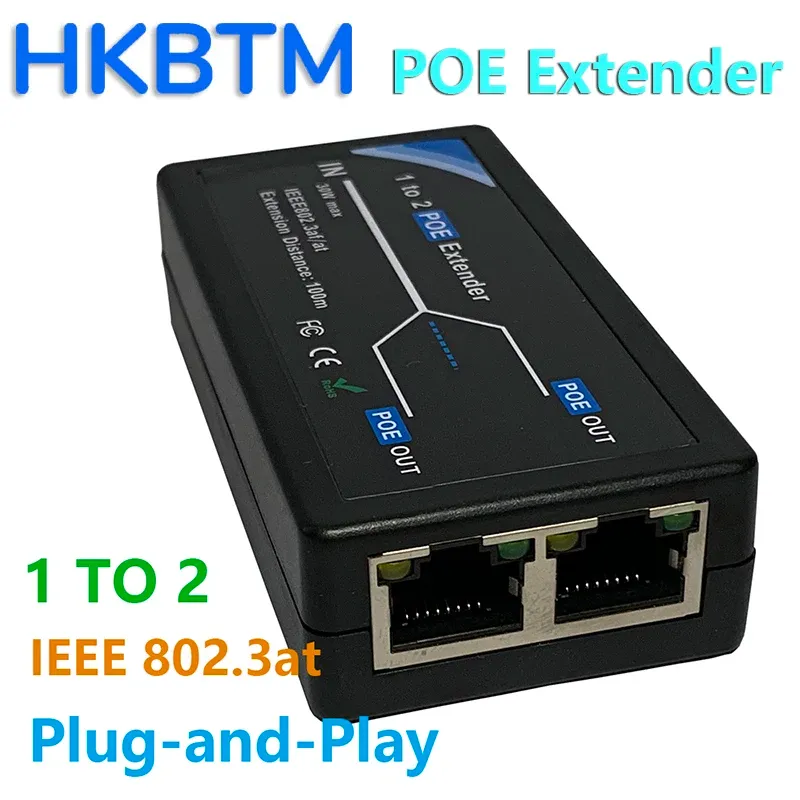
2 Port POE Extender 100Mbps with IEEE 802.3af Standard for NVR IP Camera AP IP VOICE POE Extend 100 meters for POE range
2 Port POE Extender 100Mbps with IEEE 802.3af Standard for NVR IP Camera AP IP VOICE POE Extend 100 meters for POE range
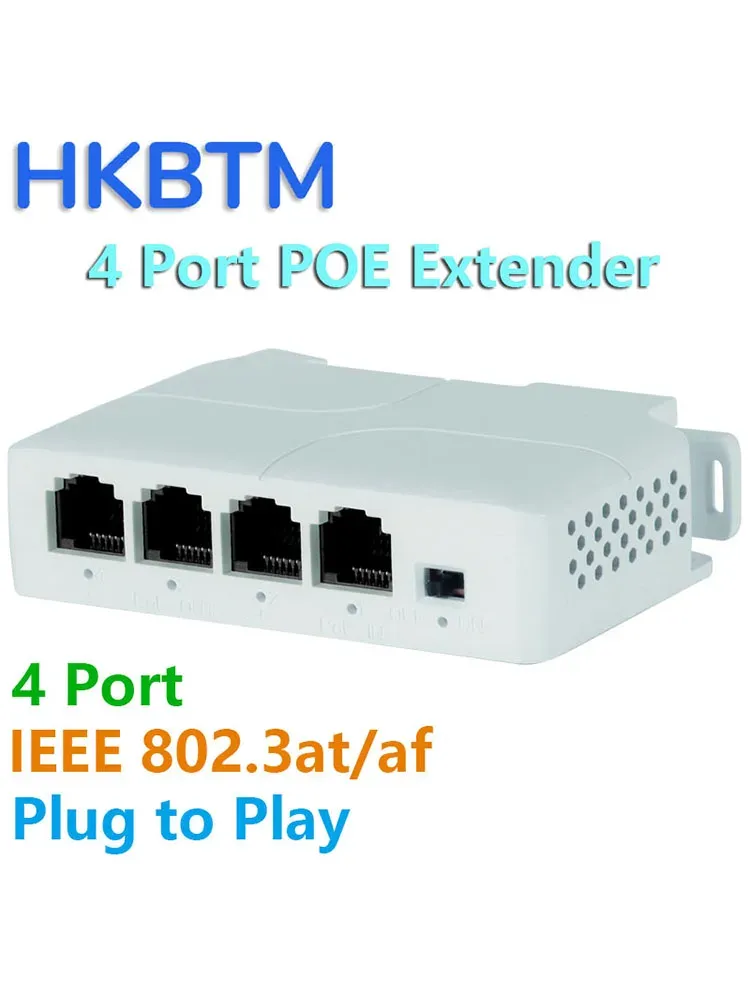
4 Port PoE Extender Waterproof poe repeater for IP Port Transmission Extender for POE Switch NVR IP Camera
4 Port PoE Extender Waterproof poe repeater for IP Port Transmission Extender for POE Switch NVR IP Camera
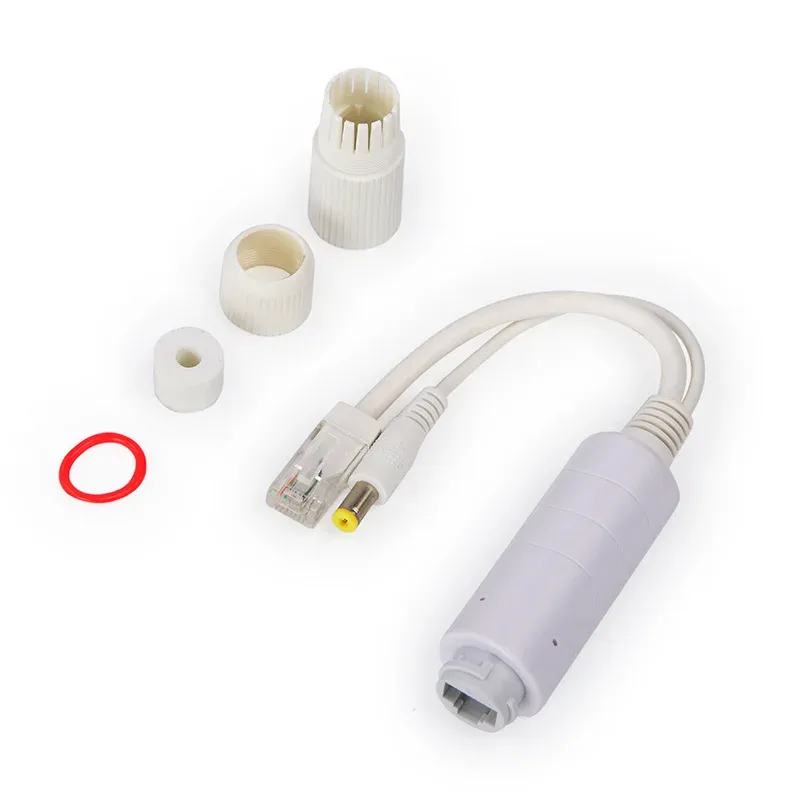
48V to 12V POE Spliter Waterprrof With Video And Power Adapter Cable Supply Module Injector for IP Camera Extender
48V to 12V POE Spliter Waterprrof With Video And Power Adapter Cable Supply Module Injector for IP Camera Extender
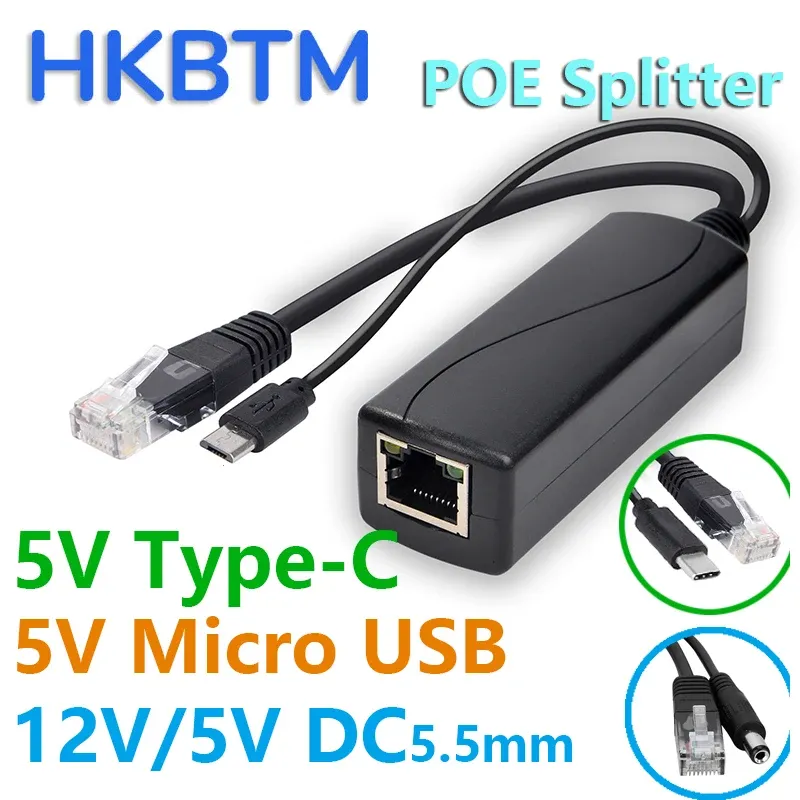
POE Splitter 48V To 5V 12V Micro USB tpye-C BarrelJack Power Supply for Huawei for Hikvision for Bobcat for Raspberry Pi
POE Splitter 48V To 5V 12V Micro USB tpye-C BarrelJack Power Supply for Huawei for Hikvision for Bobcat for Raspberry Pi
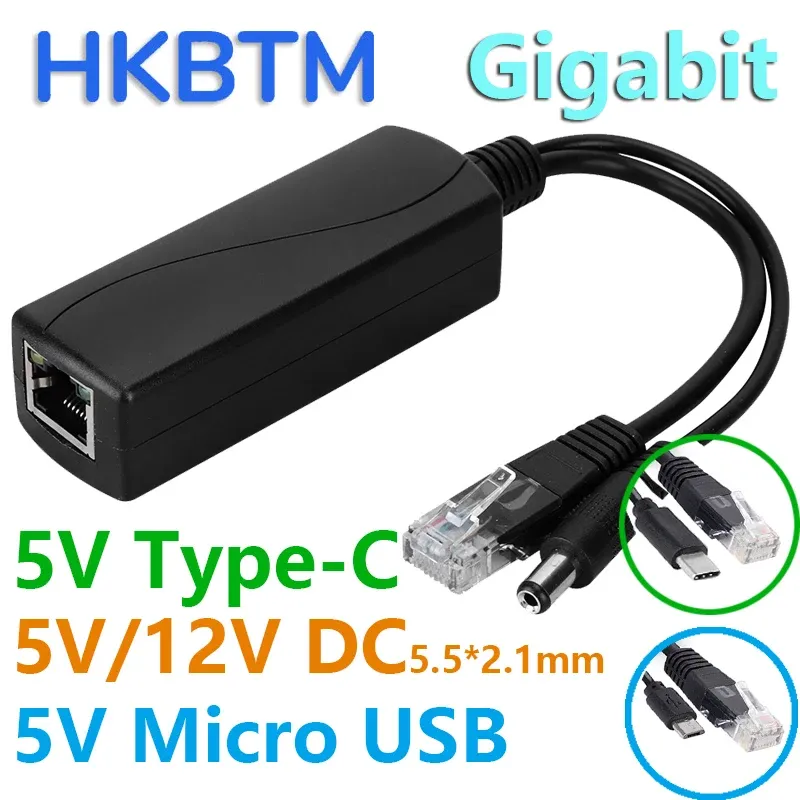
Gigabit PoE Splitter Micro USB/Type-C/DC Power over Ethernet for IP Camera/Raspberry PI/sensecap/Bobcat
Gigabit PoE Splitter Micro USB/Type-C/DC Power over Ethernet for IP Camera/Raspberry PI/sensecap/Bobcat
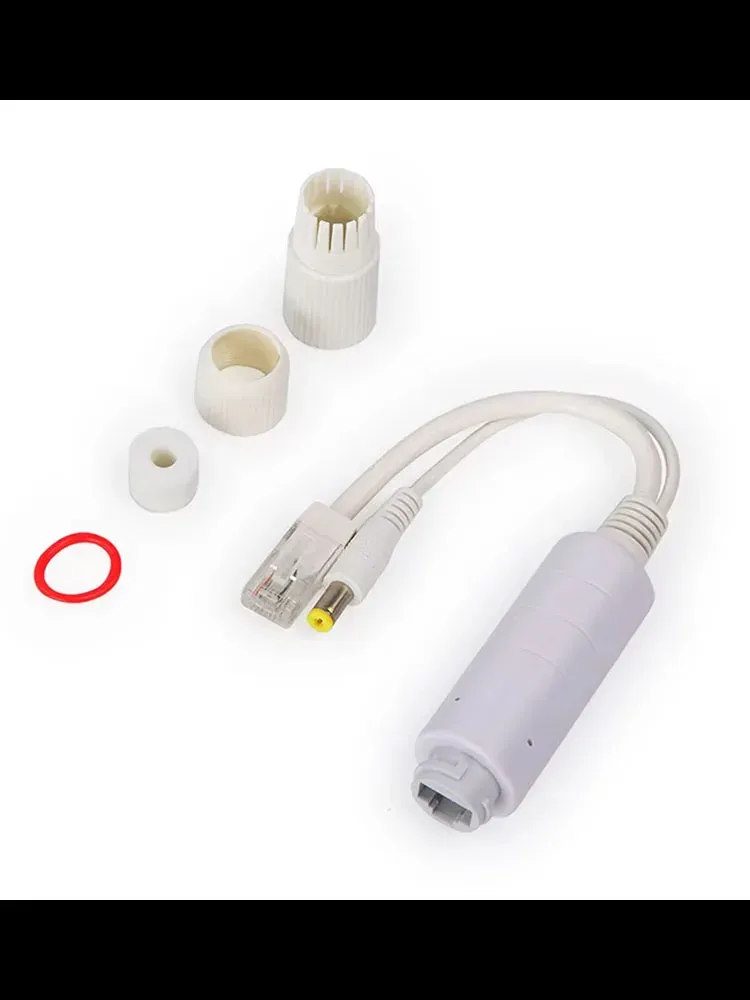
Waterproof POE Splitter DC 12V IEEE 802.3af 100Mbps Power over Ethernet for IP Cameras NVR System Wifi Connection AP
Waterproof POE Splitter DC 12V IEEE 802.3af 100Mbps Power over Ethernet for IP Cameras NVR System Wifi Connection AP

28cm USB Cable with Switch ON/OFF Cable Extension Toggle for USB Lamp USB Fan Power Supply Line Durable HOT SALE Adapter
28cm USB Cable with Switch ON/OFF Cable Extension Toggle for USB Lamp USB Fan Power Supply Line Durable HOT SALE Adapter
The engineering behind it
PoE Surge Protection and Grounding Design
Why outdoor PoE runs fail during storms, how surge energy actually enters the system, and the isolation, bonding and SPD choices that keep cameras alive.
Read articleIndustrial PoE: Wide Temperature, Surge Protection and DIN-Rail Solutions
What makes PoE industrial-grade: wide temperature ratings, surge and EMC protection, hardened enclosures, DIN-rail mounting and field applications.
Read articleWhat Is a PoE Extender and How Does It Work
How a PoE extender regenerates both data and power to push a link past 100 metres, how far you can cascade them, and what the power budget looks like through a chain.
Read articlePoE Cabling Guide: Cat5e, Cat6, Cat6a and Distance Limits
PoE cabling fundamentals: the 100m rule, conductor gauge by category, bundling and heat, and what gigabit and high-power PoE demand.
Read articleSpecify it with us
Tell us the load, the distance and the environment, and we will come back with a part list. We also build to specification where nothing off-the-shelf fits.