
How to Choose the Right PoE Splitter
Key criteria for choosing a PoE splitter: standard compliance, output voltage and current, connector type, gigabit support, and IEEE vs passive.
Choosing a PoE splitter looks simple until a deployment fails because the output voltage is wrong, the link drops to 100 Mbps, or a passive unit damages a device. This guide walks through the selection criteria that matter most to system integrators and engineers, so you can specify the right part the first time.
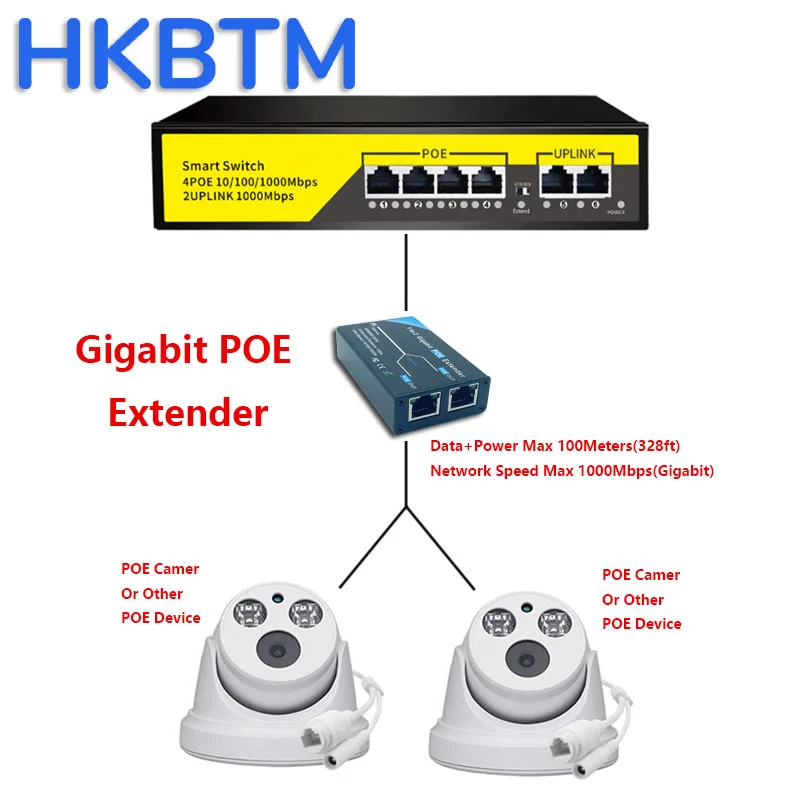
1. Match the PoE Standard
Identify the standard your upstream switch or injector supports - 802.3af (Type 1), 802.3at (Type 2), or 802.3bt (Type 3/4) - and select a splitter rated to negotiate with it. An IEEE-compliant splitter handles detection and classification automatically and remains backward compatible, so an 802.3at-class splitter will also work on an 802.3bt source. The splitter's budget must comfortably exceed your device's draw after conversion losses.
2. Confirm Output Voltage and Current
This is the most common point of failure. Read the powered device's label or datasheet for its required input voltage (commonly 5 V, 9 V, 12 V, or 24 V) and its current/wattage. Choose a splitter whose regulated output matches that voltage exactly and whose rated current leaves margin. Supplying 12 V to a 5 V device, or undersizing current, leads to malfunction or damage.
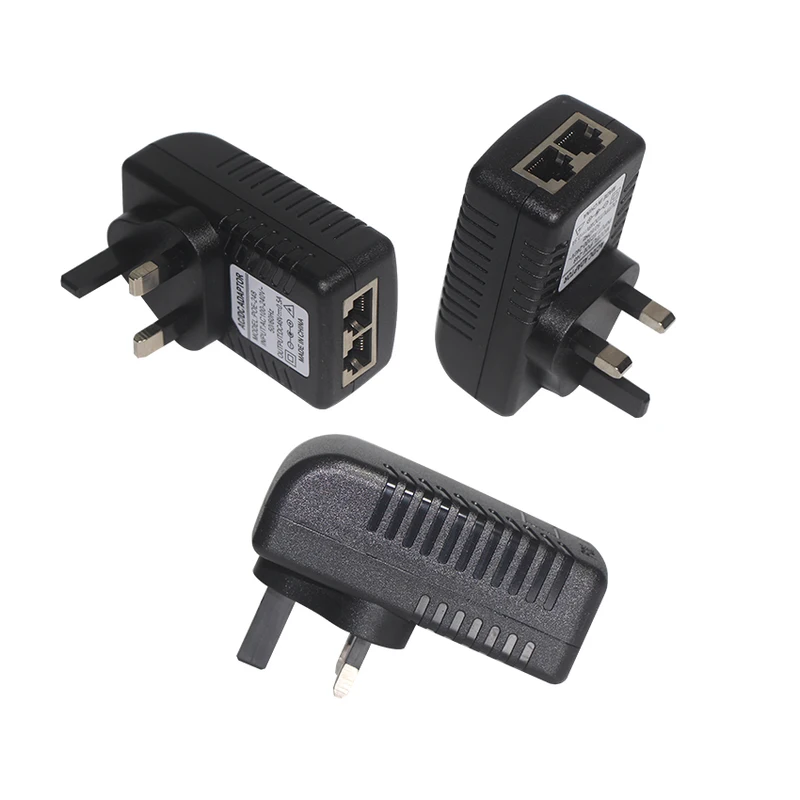
3. Pick the Correct Connector
The DC output may use a barrel jack (various inner/outer diameters), a USB connector, a Micro-USB/USB-C tip, or screw terminals. Confirm the plug polarity and physical size. On the data side, the splitter should provide an RJ45 output that matches your device's port.
4. Gigabit vs Fast Ethernet
Many low-cost splitters only pass 10/100 Mbps. If your camera, access point, or uplink needs 1000BASE-T, you must choose a gigabit-rated splitter; otherwise the link will silently negotiate down to 100 Mbps and throttle high-resolution video or high-throughput Wi-Fi.

5. IEEE-Compliant vs Passive
Active, IEEE-compliant splitters perform the safety handshake and are the default for professional installations. Passive splitters tap a fixed voltage with no negotiation and must be paired precisely with a passive source of the same voltage - a mismatch can be destructive. Unless you control both ends and have a specific reason, specify an active splitter.
Selection Quick-Reference
| Criterion | What to check | Why it matters |
|---|---|---|
| Standard | af / at / bt rating of PSE and splitter | Ensures successful power negotiation and budget |
| Output voltage | 5 / 9 / 12 / 24 V to match device | Wrong voltage damages or disables the device |
| Output current/watts | Device draw plus margin | Prevents brownout and instability |
| Connector | Barrel size, polarity, USB type | Physical and electrical fit |
| Data rate | Gigabit vs 10/100 | Avoids throughput bottlenecks |
| Compliance | Active IEEE vs passive | Safety and broad interoperability |
| Environment | Temperature range, enclosure | Reliability outdoors or industrial sites |
Don't Forget the Environment
For outdoor cameras, ceiling voids, or factory floors, specify a splitter with an appropriate operating-temperature range and, where needed, a sealed or industrially rated enclosure. Standard plastic indoor splitters will fail prematurely in heat, cold, or moisture.
A Practical Decision Path
- Read the device datasheet: voltage, current, connector, and data rate.
- Identify the upstream PoE standard and confirm budget headroom.
- Select an active, IEEE-compliant splitter with matching voltage and ample current.
- Verify gigabit support if needed, and the correct DC connector and polarity.
- Account for temperature and enclosure rating for the install location.
When an off-the-shelf splitter does not match the voltage, connector, or environmental needs of a project, a custom build is often the cleaner solution. As a manufacturer, we configure output voltage, connector, data rate, and enclosure to the exact endpoint - eliminating adapter stacks and the failures they cause.
Need PoE hardware for your project?
Browse our PoE splitters or request a custom power module built to your spec.